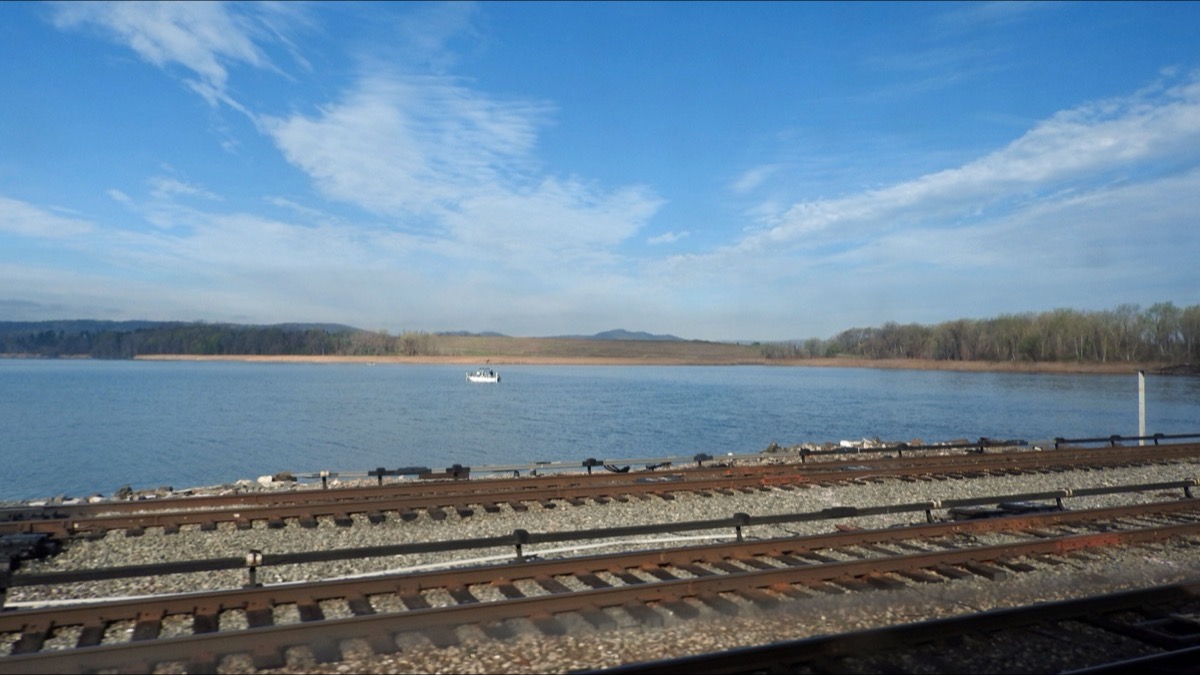
Croton Point: From the Kitchawank Village of Navish to the Underhill Vineyards
Photo: Jim.henderson / Wikimedia Commons (CC BY 4.0)
Most of us think of Croton Point as a place to go. A beach in summer, a long walk in the fall, the spot where you pull off Route 9 to watch the river go wide. That's all true. But it isn't the whole story, and it isn't even the oldest part of it.
The oldest part is the shells.
Seven thousand years of oysters
Long before anyone drew a county line, people were living on this point and eating very, very well. The evidence is still in the ground: oyster shell middens, the heaps of discarded shells that build up where people gather, cook and stay. The ones at Croton Point show people living here as early as 7,000 years ago, and Westchester County Parks says they are believed to be the oldest on the North Atlantic Coast.
Sit with that number for a second. Seven thousand years. Not a summer camp. Not a seasonal stopover. A home, used across hundreds of generations.
By the time Europeans arrived, the point belonged to the Kitchawank, part of the Wappinger Confederacy. They had a fortified village here called Navish. It's a name worth learning and saying out loud, because it's the first name this place had that we know of, and it's the one that gets left off most of the signs.
We want to be honest about the limits of what we can tell you. Almost everything written down about Navish was written by the people who came later, and that's not the same as hearing it from the Kitchawank and their descendants. The Croton Point Nature Center has displays on local and Native American history, and it's the right place to start if you want more than a newsletter can give you.
A deed, a trading post, and a new name
Then the paperwork starts. In 1682 a Dutch trader named Cornelius Van Bursum bought the point from the Native people who lived there. Later, William and Sara Teller ran a trading post on it, which is why you'll still see it called Teller's Point on old maps. Eventually Stephanus Van Cortlandt folded it into his enormous manor.
Here's the part we find fascinating. A year after that first sale, on November 1, 1683, the colonial Assembly under Governor Thomas Dongan passed a set of laws that created twelve counties "for the better governing and settling Courts." Westchester was one of them. So when the county was drawn, the point already had thousands of years of history behind it, and the ink on its first deed was barely dry.
If you want to see where the county itself starts, the Westchester County Clerk's Office in White Plains holds a facsimile of that 1683 law. The County Clerk is also the oldest continuously elected office in the county, which is the kind of fact we love: a job that's been around longer than almost every building you drive past.
The Grape King
Fast forward. In 1804 Robert T. Underhill bought the point, and his sons turned it into something nobody expects when they picture a county park.
One son, William, ran steam-powered brickyards. The other, Dr. Richard T. Underhill, planted grapes. In 1827 he began growing Catawba and Isabella grapes, and over the following decades the vineyard grew to as much as 75 acres. He bred his own hybrid, called the Croton grape, which first fruited in 1865. The Croton Historical Society notes that people called him the "Grape King."
Picture it. Not woods. Not a beach. Rows and rows of vines running down toward the river, with brick smoke rising from the other end of the point.
Some of the Underhill wine vaults survive. They're reportedly boarded up, so please don't plan your visit around getting inside them. But knowing they're there changes how the place feels when you walk past.
How it became ours
On July 2, 1923, the Westchester Board of Supervisors bought the point, and it became the park we know. It's 508 acres now, and it's one of the few places in the county where you can stand on land that holds every chapter at once: the shell middens, the trading post name, the brick and the vines.
Go see it
You don't need a special occasion. Croton Point Park, at 1A Croton Point Avenue in Croton-on-Hudson, is open from 8am to dusk seven days a week, all year, and you don't need a county park pass. The Nature Center is open Tuesday through Sunday from 9am to 4pm (it's closed Mondays), and you can call ahead at 914-862-5297.
Go on a gray November afternoon when the beach is empty. Walk out toward the tip and look back at the shoreline. Think about the oysters, the village of Navish, the Tellers' trading post, the Grape King's vines and the smoke from the brickyards.
Croton Point isn't just a place to go. It's a place that's been lived in for seven thousand years, and the county is the newest part of its story.
Get the Weekly Newsletter
Local events, jobs, and community news, every Thursday morning.
Free. No spam. Unsubscribe any time.